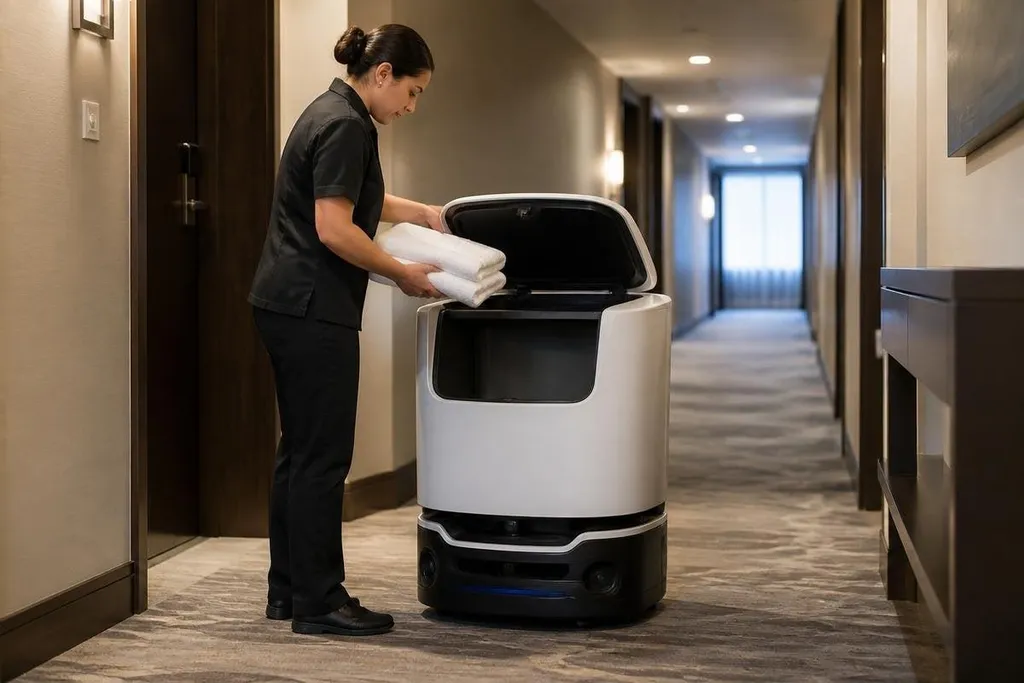
A hotel robot can carry towels, meals, or toiletries from a service area to a guest room without calling a staff member away from the front desk. That narrow task explains where hotel automation works today: repeated indoor trips, clear routes, and items that fit inside a locked compartment.
- Delivery robots handle routine room requests
- Elevators and doors still need careful setup
- Staff remain responsible for service, safety, and exceptions
The jobs hotel robots can handle
Most hotel service robots focus on transport. A staff member loads an item into a compartment, enters the room number, and sends the robot into the guest area. The robot uses cameras, LiDAR, or other sensors to map its route and avoid people, walls, and furniture.
LiDAR measures distance with light pulses. That information helps the robot build a map and adjust its path when a guest, luggage cart, or cleaning trolley blocks the corridor. The robot still needs a clear route, suitable floor surfaces, and enough space to turn.
At the room, the robot may call an elevator through a hotel control system or wait for staff support. Some systems use a compartment that opens with a code sent to the guest.
Others ask the guest to meet the robot in a shared area. The exact handoff matters because a delivery that stops outside a locked room still needs a person to finish the task.
The same basic setup can move laundry, spare toiletries, towels, or food containers. These jobs are easy to define, happen many times, and do not need a robot to make a judgment about a guest's needs.
Why the hotel cares about the route
A delivery robot can change how staff spend their shift. A worker who would have walked from the service area to a room can stay near the front desk, kitchen, or housekeeping team. The value comes from the saved trip, not from the robot's appearance.
That benefit depends on the building. One property with one tower, wide corridors, and reliable elevators gives the robot a simpler job than a site with split levels, heavy doors, narrow hallways, and many guests moving at once.
The robot also needs a place to charge and wait. A charging dock near the service area keeps the route short, while a badly placed dock can add traffic and delay. Staff need a clear process for loading, cleaning, recovering a stuck robot, and handling a delivery that reaches the wrong floor.
A hotel operator comparing vendors also needs reports on how these systems run in real buildings. Robot24.com hotel robotics reports can place delivery robots beside the sensors, routes, and staff handoffs that decide whether a pilot works beyond a demo. That leaves the harder question: which hotel jobs still need a person?
The work robots still can't take over
Hospitality involves tasks that change from one guest to the next. A robot can carry an extra towel, but it can't decide how to respond when a guest reports a leak, asks for a room change, or needs help after a missed connection.
People also react differently to machines in shared spaces. A robot moving through a lobby must leave room for luggage, wheelchairs, children, and guests who stop without warning. Its speed, sound, lights, and screen messages all affect whether people understand what it wants to do.
Safety adds another layer. The hotel needs rules for emergency stops, door access, cleaning fluids, hot food, and faults near guests. Staff must know who takes control when the robot stops beside an elevator or loses its map.
The open question is cost. Without a purchase price, service contract, deployment count, or measured labor saving, nobody can calculate payback from a product description alone. A robot that completes deliveries but needs frequent staff rescue may move work around instead of removing it.
A practical check before buying
A hotel manager can test the idea with a small route and a clear record of the work involved:
- Count daily trips: record room deliveries by shift, distance, and item type.
- Map the building: mark elevators, doors, ramps, narrow turns, and busy lobby areas.
- Watch the handoff: confirm how the guest receives the item and how staff open the compartment.
- Measure recovery work: log every blocked route, wrong stop, sensor fault, and manual rescue.
- Price the full system: include the robot, software, dock, service plan, building changes, and staff time.
- Set a stop rule: pause the project if rescue work cancels the saved walking time.
I'd skip a hotel robot until the operator can measure those trips and recovery calls. A short pilot on one floor gives a better answer than a polished lobby demonstration.
Hotel robots are useful when the job is a repeatable delivery through a prepared building. The next useful proof is a measured result: completed trips, staff rescue minutes, and the full cost of running the system for one month.