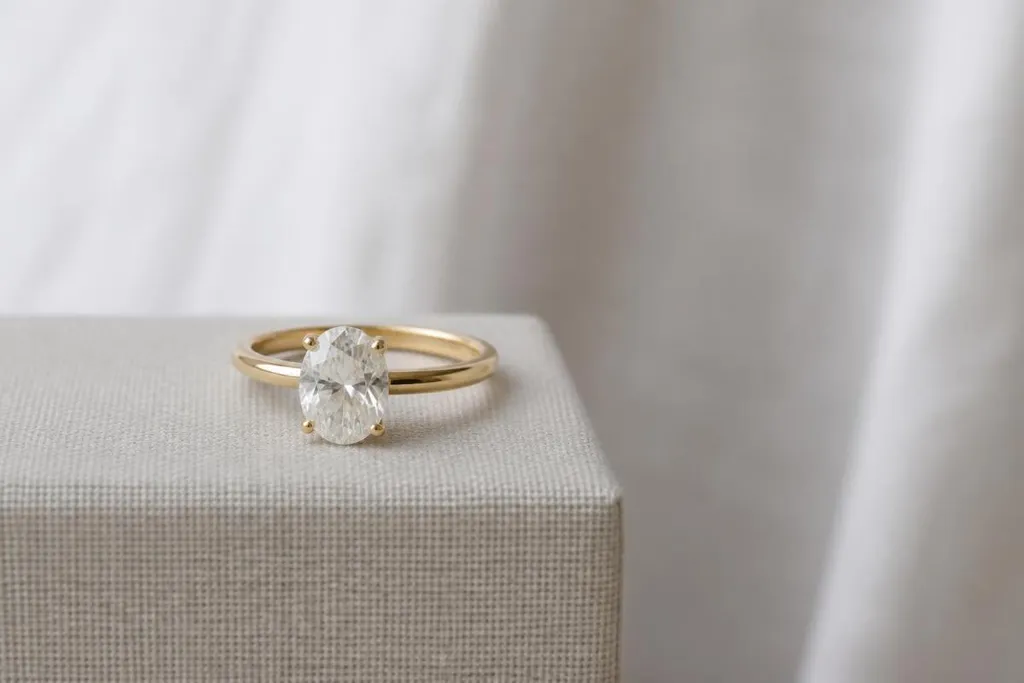
Personal jewellery should feel considered from every angle, not merely impressive in a photograph. A strong visual idea is most persuasive when comfort and longevity have shaped it too. At its best, the design offers brilliant-cut sparkle in an elongated outline that creates an elegant line along the finger. That clear purpose offers more than a passing trend: it creates an aesthetic that can be adapted to personal taste without losing its essential character. The intended impression is polished, with a result that remains practical.
For practical examples of the style in a resolved form, view the Isabella gold engagement ring. Looking across complete designs makes it easier to judge scale, side profile and the relationship between the principal feature and the surrounding metalwork. It also places carat weight, dimensions and decorative detail in the context of a finished piece rather than a specification list.
What the Metal Brings to the Design
The style succeeds through visual hierarchy. Its curves feel soft and classic, yet the extra length gives the design a more individual presence than a conventional round centre. A disciplined design preserves this identity even when colour, extra stones or a more decorative finish are introduced. That discipline keeps the composition polished rather than overstated, while supporting a piece that remains practical.
A second layer comes from the supporting materials and geometry. The golden tone creates beautiful contrast around colourless stones and brings additional richness to warm or saturated gemstones. Gallery height, shoulder transition and the amount of visible metal decide whether the ring appears light, architectural or richly detailed from the side. This is why two pieces built around the same headline idea can produce very different moods: one may feel crisp and restrained, another warmer or more decorative, without either losing the design's identity. From every angle, the workmanship should look polished and feel practical.
Balancing Colour, Proportion, and Setting
Selection should begin with the feature that changes the appearance most: compare length-to-width ratio, face-up spread and the visibility of any bow-tie effect, as two oval stones of the same carat weight can look quite different. This approach keeps specifications in context and prevents a single number or label from dominating the decision. Such comparison encourages a polished decision with a practical basis.
The setting must do more than hold the design together. Prongs at the top and bottom help protect the narrow ends, while a well-proportioned basket keeps the outline open and graceful. The best craftsmanship feels discreet: security is present, but it does not overwhelm the feature it protects. The finished construction should appear polished and prove practical.
Comfort, Care, and Everyday Wear
Longevity begins with choosing a design appropriate to the wearer's habits. Setting height, exposed edges and the way the band meets neighbouring fingers all influence whether the ring feels natural during ordinary movement. For regular wear, remove the ring during heavy manual work, store it separately and arrange professional checks if a claw catches or the setting begins to feel different. Those habits help a polished piece remain practical.
Future flexibility has real value. Trying the design beside a wedding band is worthwhile even before the band is chosen, as gallery shape and setting height influence how naturally another ring will sit. A considered choice can move from everyday clothing to formal occasions without losing the personal quality that made it appealing initially. The wider collection can then feel polished, while this piece remains practical.
Final Thought
This style is most successful when its defining idea, construction and daily function are treated as one decision. The attraction may begin with sparkle, colour or silhouette, but lasting satisfaction comes from proportion, secure craftsmanship and a fit that feels natural. The version that still looks convincing after the first excitement has settled is usually the one with the strongest chance of remaining meaningful for years. Patient comparison is part of choosing well, not a delay. A short pause now can prevent a visually impressive but unsuitable choice. That is the difference between a merely attractive option and one that feels both polished and practical.